
Food quality 1st
Before we debate intermittent fasting, protein targets, or metabolic typing, there is a more urgent conversation to have. How good, is the quality of the food you eat?
The nutrition industry has a strange habit of debating the furniture while the house is on fire. We argue about carbohydrate timing and the optimal omega-6 to omega-3 ratio, while the average adult in the UK and US now derives more than half their daily calories from ultra processed food! We optimise the margins while the foundation, the actual biological quality of what we put into our bodies goes largely unexamined.
This post is the starting point that should precede every nutrition conversation. Food quality and the chemical reality of what industrial food production puts on your plate without advertising it.
the numbers
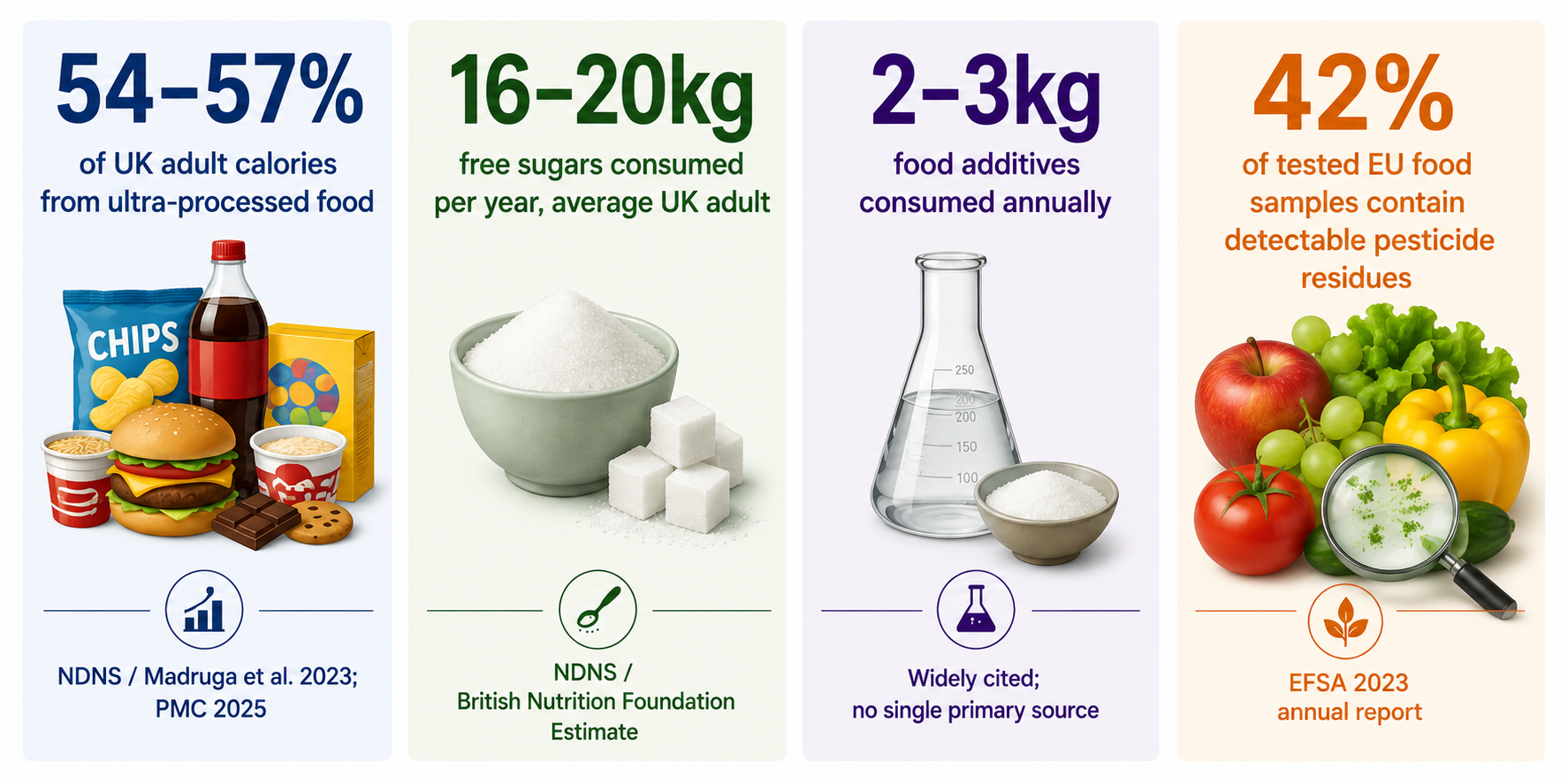
Ultra processed food now accounts for approximately 57% of total caloric intake among UK adults and around 60% in the United States, according to data published in the British Medical Journal (Monteiro et al., NOVA classification system) and the National Health and Nutrition Examination Survey (NHANES). That figure is not a problem with willpower. It is a structural feature of a food environment engineered for consumption, not nutrition.
The downstream numbers are striking. Conservative estimates suggest the average Western adult consumes approximately 2–3 kilograms of food additives per year. A figure that includes emulsifiers, preservatives, synthetic colourings, flavour enhancers, and thickening agents. This estimate circulates widely in nutrition science but does not derive from a single primary study; it should be understood as a reasonable order of magnitude figure, not a precise measurement. Free sugar intake is more robustly documented: NDNS data shows UK adults consume an average of 44–55g of free sugars per day. That’s an annual intake of approximately 16–20 kilograms, double the NHS recommended maximum! Pesticide residue data from EFSA's 2023 annual report shows that 42% of tested food samples contained detectable pesticide residues, with around a quarter containing multiple residues simultaneously.
Artificial sweeteners; aspartame, sucralose, and acesulfame-K are present in thousands of products marketed as healthy alternatives. The research increasingly suggests they are not neutral. A landmark study by Suez et al. (2014, Nature) demonstrated that non-caloric artificial sweeteners alter gut microbial composition and impair glucose tolerance in both mice and human subjects. Sucralose has been shown to reduce beneficial Lactobacillus populations at doses achievable through routine consumption. These are not trace effects in unrealistic laboratory doses. They are biologically significant responses at real world intake levels.
A slow, cumulative assault
The gut microbiome, the 38 trillion microorganisms governing immune regulation, neurotransmitter production, metabolic signalling, and systemic inflammation, is exquisitely sensitive to chemical inputs. Chassaing et al. (2015, Nature) showed that dietary emulsifiers, specifically polysorbate-80 and carboxymethylcellulose both found in ice cream, plant-based milks, and countless processed staples, disrupt the protective mucus layer of the gut, promoting bacterial translocation and chronic low-grade inflammation.
This matters because chronic low-grade inflammation is not a dramatic event. It does not announce itself. It is the background noise that, over years and decades, elevates risk for metabolic disease, cardiovascular dysfunction, cognitive decline and autoimmune conditions. The liver, your primary detoxification organ, is managing a daily queue of synthetic compounds it was not designed to process at scale.
The gut microbiome is not a curiosity. It is the switchboard for immune function, mood, metabolism, and inflammation. What you feed it determines how well that switchboard operates.
The Food quality spectrum
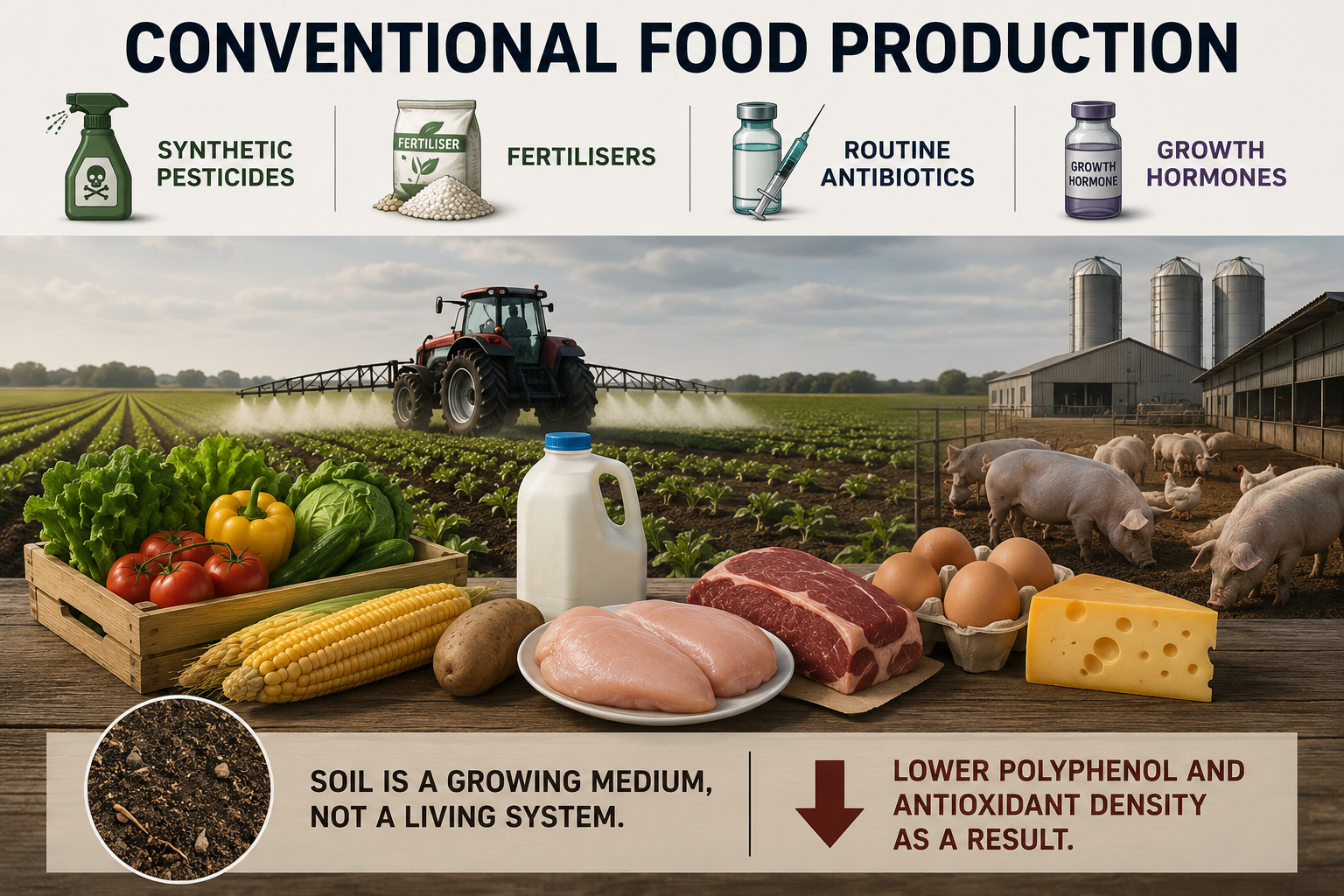
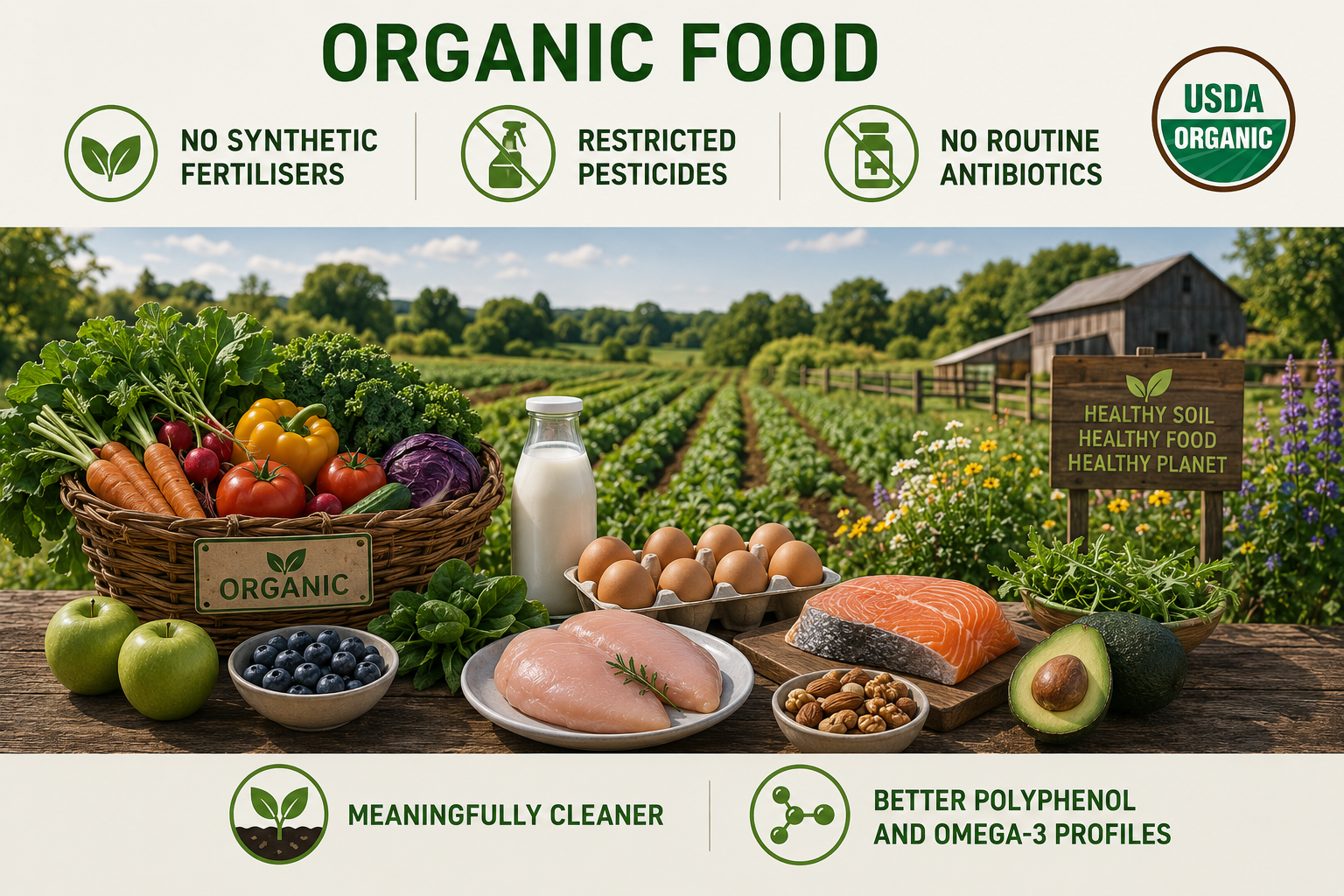
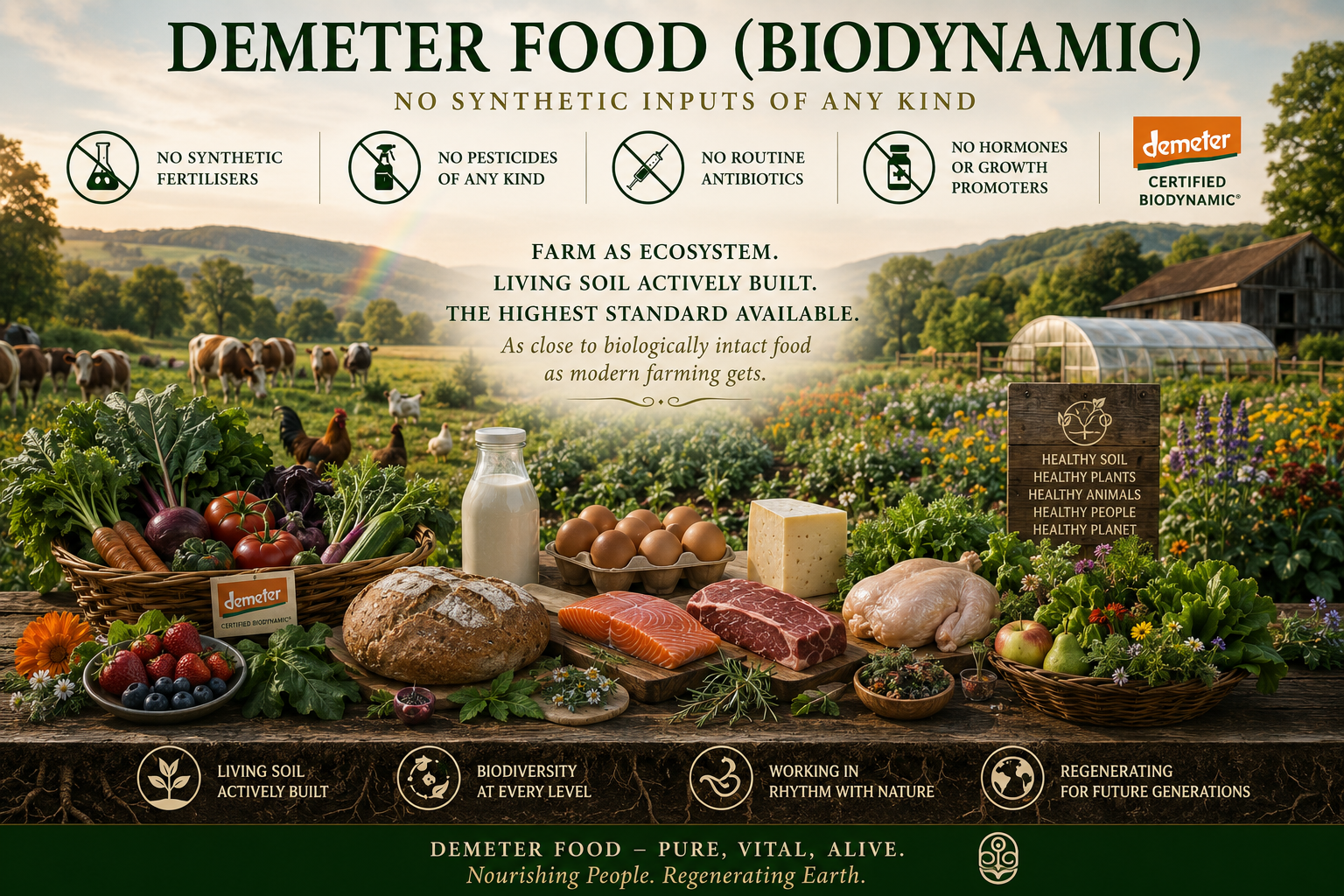
The phrase "eat better" is too vague to be useful. Useful means understanding the specific differences between food production standards and choosing according to what those differences actually represent. The following diagrams show the differences between conventionally, organic and Demeter produced food.
Budget & strategy
Quality food costs more! The question is where upgrading delivers the greatest biological return.
The answer is animal protein and the reason is bioaccumulation. Large animals, cattle, pigs, farmed salmon, sit high in the food chain. Fat-soluble toxins (synthetic hormones, organochlorine pesticides, veterinary drug residues, environmental pollutants like PCBs) dissolve in fat and accumulate in fatty tissue over the animal's lifetime. A conventionally raised cow that has consumed years of pesticide treated grain and routine antibiotics is not simply a cow. It is a concentrated repository of every chemical input that went into producing it. Biomagnification means the chemical load multiplies at each step up the food chain. The concentration in beef fat is orders of magnitude higher, than in the grain that fed the animal.
WHERE TO PRIORITISE QUALITY — IN ORDER OF IMPACT
1. Beef, lamb, and pork. Especially fatty cuts. Highest bioaccumulation potential. Prioritise pasture raised or organic first. This single upgrade delivers the largest reduction in chemical load.
2. Dairy and eggs: same fat soluble logic applies. Pasture raised eggs and organic whole dairy matter. Significant omega-3 profile improvements in pastured animals.
3. Oily fish, wild caught over farmed where possible. Farmed salmon in particular carries high contaminant and antibiotic exposure.
4. Fruit and veg. Plant based pesticide residues carry lower bioaccumulation risk. Prioritise organic for high residue crops: strawberries, spinach, apples.
Reframe the cost entirely: this is not a food budget. It is a health infrastructure decision. The weekly premium for quality meat and dairy is modest against the compounding cost of chronic inflammation, declining metabolic function and the medical interventions that follow. Poor quality food is not cheap food. Its costs are simply deferred and paid with interest.
The water problem
Nutrition conversations rarely include water quality, beyond the generic instruction to drink more of it. Municipal tap water in most developed countries carries a chemical profile that most people are unaware of.
Chlorine and chloramine are added to municipal supplies as disinfectants, effective against pathogens, but also disruptive to gut microbiome diversity at routine exposure levels. Microplastics have been detected in tap water samples globally, with a 2018 study commissioned by Orb Media finding synthetic fibres in 72% of European tap water samples tested. These are not yet fully characterised in terms of long term biological effect, but their presence in human blood, lung tissue, and placentas suggests the exposure is not without consequence.
The most significant and underreported issue is pharmaceutical contamination. Conventional water treatment including filtration, chlorination, and UV treatment, cannot remove trace pharmaceutical compounds from supply. Synthetic oestrogens from oral contraceptives (particularly ethinylestradiol), antidepressants (SSRIs), antibiotics, anti-inflammatories and beta-blockers have been detected at measurable concentrations in treated drinking water by the Environment Agency, the WHO and multiple peer reviewed studies. These compounds are biologically active at nanogram concentrations. The endocrine disrupting effects of trace synthetic oestrogen exposure are well documented in aquatic ecosystems and are an active area of human health research.
Reverse osmosis filtration currently offers the most comprehensive removal of pharmaceutical residues, heavy metals, and microplastics. Activated carbon filters meaningfully reduce chlorine, some pesticides, and certain organic compounds, but are less effective against dissolved pharmaceuticals. Neither is a perfect solution, but the gap between unfiltered tap and properly filtered water is significant enough to warrant consideration, particularly for anyone prioritising hormonal health or microbiome integrity.
Why this matters more after 40
Detoxification efficiency declines with age. Hepatic Phase I and Phase II enzyme activity, the liver's primary processing systems for foreign compounds reduces progressively from midlife. Gut permeability tends to increase with age, allowing a higher proportion of chemical inputs to cross the intestinal barrier into circulation. Baseline systemic inflammation rises, meaning the additional inflammatory burden of ultra processed food lands on an already elevated starting point.
The cumulative chemical load of decades also matters. Someone at 45 has spent 45 years in a food environment of increasing chemical complexity. The argument for upgrading food and water quality is not that conventional food causes acute harm. It is that the compounding effect of decades of low grade biological stress, from the gut microbiome outward has measurable consequences for metabolic health, immune function, hormonal balance and the pace of cellular ageing. It is a reason to make the switch now and to start where it counts most.
You can't out-supplement a toxic food supply. But you can start making choices that work with your biology, not against it. The first step is knowing what you're actually consuming and what it's costing you. Please feel free to contact me for a chat about this.
REFERENCES
Madruga M. et al. (2023). Trends in food consumption according to the degree of food processing among the UK population over 11 years. British Journal of Nutrition, 130(3), 476–483.
National Diet and Nutrition Survey (NDNS) Rolling Programme. UK adults UPF and free sugar intake data, waves 1–11 (2008/09–2018/19). Published via British Nutrition Foundation and PMC.
Suez J. et al. (2014). Artificial sweeteners induce glucose intolerance by altering the gut microbiota. Nature, 514, 181–186.
Chassaing B. et al. (2015). Dietary emulsifiers impact the mouse gut microbiota promoting colitis and metabolic syndrome. Nature, 519, 92–96.
Barański M. et al. (2014). Higher antioxidant and lower cadmium concentrations and lower incidence of pesticide residues in organically grown crops. British Journal of Nutrition, 112(5), 794–811.
EFSA (2025). The 2023 European Union report on pesticide residues in food. EFSA Journal. doi:10.2903/j.efsa.2025.9398. Note: 42% of samples contained detectable residues; 98% were within legal limits.
Orb Media / Tyree & Morrison (2018). Invisibles: The plastic inside us. Microplastic detection in municipal water supplies.
WHO (2012). Pharmaceuticals in drinking-water. World Health Organization, Geneva.
